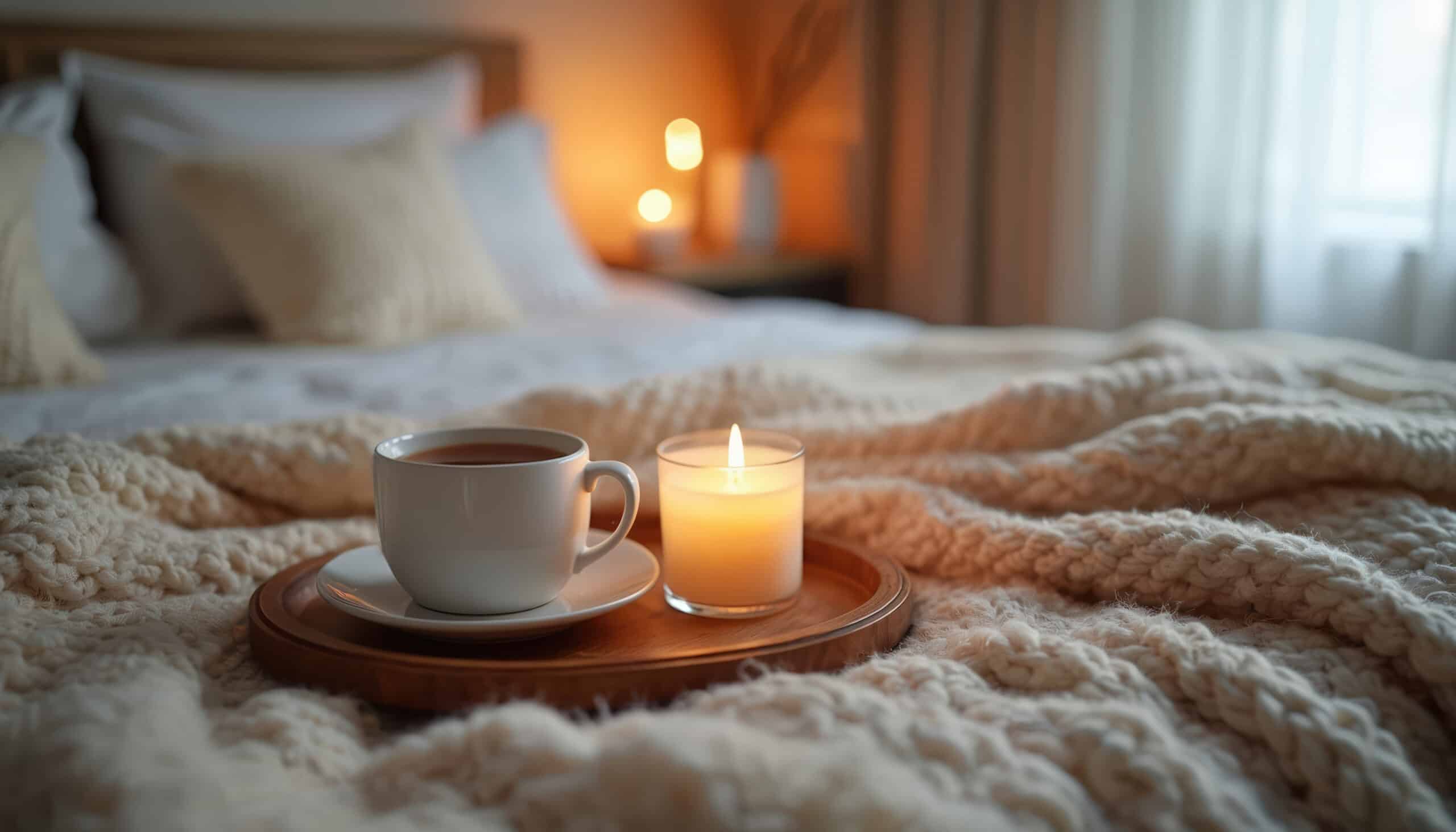
Recovery after social overload, shutdown, or a long stretch of activation is not just about what you do. It's also about what surrounds you.
The nervous system reads environmental cues constantly. Temperature, texture, pressure, light. These signals register before conscious thought. When those signals say "safe," the body begins to settle. When they say "uncertain," it stays braced.
Most recovery advice focuses on practices. Breathe. Stretch. Ground yourself. That matters. But the physical environment matters too, and it's often overlooked.
This is a list of items that send safety signals through the body. They work with texture, warmth, weight, and sensory input to support what your nervous system is already trying to do: come back to baseline.
This post contains affiliate links, which means I may earn a small commission if you buy through them, at no extra cost to you. As an Amazon Associate I earn from qualifying purchases.
When the nervous system is activated, circulation shifts. Blood moves toward the core. Hands and feet get cold. Warmth is one of the fastest ways to signal safety because it mimics the physiological state of being settled and at rest.
Weighted Blanket (15 lbs)
Research on deep pressure stimulation suggests it can support relaxation, with some studies reporting effects on serotonin and cortisol. The weight gives your body one steady, constant signal, which makes it easier to stop scanning. This is the closest thing to a full-body safety signal you can buy.
View on AmazonHeated Blanket
Different from a regular blanket. Active heat reaches the body faster and more evenly. For people who run cold when stressed (most do), a heated blanket shortens the time between "home" and "settled." Plug it in before you walk through the door if you can.
View on AmazonMicrowavable Heating Pad
Targeted warmth on the chest, stomach, or neck tells the body to soften specific areas of held tension. No cords, no buttons. Heat it, hold it, let it do the work. Especially useful for stomach tension after emotional absorption.
View on AmazonWarm Fuzzy Socks
Cold feet are a sign of sympathetic activation. Blood has pulled toward the core for fight or flight. Warm socks counteract that signal directly. This is one of the simplest nervous system interventions that exists. Put them on the moment you get home.
View on AmazonWhy warmth works: When core body temperature rises slightly, the parasympathetic nervous system activates more easily. This is the same reason a warm bath feels calming. Heat doesn't force relaxation. It creates the conditions where the body can choose to let go.
Texture is a nervous system input. Rough, scratchy, or restrictive clothing keeps the body subtly activated. Soft, loose, warm fabric does the opposite. Changing clothes when you get home is not about comfort in the casual sense. It's a sensory reset.
Oversized Soft Hoodie
Covers the neck, the wrists, the torso. Slightly oversized means no constriction. The hood adds an option for sensory cocooning when light or sound feels like too much. This is the uniform of nervous system recovery.
View on AmazonBamboo or Modal Lounge Pants
Bamboo and modal fabrics are softer than cotton and regulate temperature better. Loose waistband, no elastic digging in, no zipper, no structure. The body reads unrestricted clothing as permission to stop performing.
View on AmazonSilk or Satin Pillowcase
Smooth, cool fabric against the face reduces sensory friction. After hours of social monitoring, the face holds an enormous amount of tension. A silk pillowcase is a small signal that says: you can stop holding your expression now.
View on AmazonConnects To
Step 2 of the Social Hangover Recovery Guide says: "Change into soft, comfortable clothes. This signals safety to your body." These items are what make that step land. Having them ready and accessible means you don't have to think about recovery. You just reach for what's already there.
When the nervous system is overwhelmed, it needs fewer inputs. Not more. These items work by narrowing sensory experience down to one reliable signal: weight, darkness, or containment.
Weighted Eye Mask
Gentle pressure around the eyes is deeply calming for many people, and darkness removes visual input entirely, which is exactly what an overstimulated system needs less of. For sensory overload after socializing, this is one of the most effective single items you can use.
View on AmazonBody Pillow
Holding something against the torso activates a sense of containment similar to being held. For people who feel emotionally full or physically tense after being around others, a body pillow creates pressure without requiring another person's energy.
View on AmazonNoise-Canceling Earbuds or Earplugs
After hours of tracking voices, tones, and ambient sound, the auditory system stays activated even in silence. Noise canceling doesn't just block sound. It tells the brain: there is nothing left to monitor.
View on AmazonWeighted Lap Pad
Smaller and more portable than a full weighted blanket. Place it across your thighs while sitting. The localized deep pressure helps when a full blanket feels like too much but you still need grounding input. Originally designed for occupational therapy.
View on AmazonYour nervous system doesn't just respond to what touches your body. It responds to the space you're in. Light, sound, scent. If the environment says "active" or "bright" or "unpredictable," the body stays on alert. These items help the room itself become a recovery tool.
Warm Vanilla Candle
Vanilla is a soft, familiar scent that most people find comforting, and a candle offers warmth, low light, and gentle scent without being overwhelming. Unlike a diffuser, a candle doesn't fill the room aggressively. You control the intensity by where you place it. For a nervous system already dealing with sensory overload, that control matters.
View on AmazonDim, Warm-Toned Light (Salt Lamp or LED)
Overhead lighting keeps the brain in daytime mode. A warm, low light source placed below eye level signals the body to begin its wind-down process. Salt lamps do this naturally with their amber glow. So does a simple warm-toned LED on its lowest setting.
View on AmazonWhite Noise Machine
Consistent, predictable sound is the opposite of what a hypervigilant nervous system has been tracking all day. White noise or rain sounds create a steady auditory floor that lets the brain stop scanning for changes. Useful for the transition from "out in the world" to "home and safe."
View on AmazonSocial activation burns energy. The body uses glucose, releases cortisol, tenses muscles. Recovery includes replacing what was spent. These items make that process require zero decision-making.
Insulated Water Bottle
Dehydration amplifies every nervous system symptom: brain fog, tension, fatigue, irritability. A water bottle that stays cold and sits within arm's reach means you'll drink without thinking about it. Hydration is the most overlooked recovery tool.
View on AmazonHerbal Tea (Chamomile or Lemon Balm)
The ritual of making tea creates a small, predictable sequence: fill, boil, pour, wait, sip. That structure itself is regulating. Chamomile and lemon balm both support the parasympathetic system. The warmth of the cup in your hands adds another layer of sensory input.
View on AmazonThe Social Hangover Recovery Guide
If you want a step-by-step recovery process for when you get home after being around people, the Social Hangover Recovery Guide walks you through exactly what to do with the exhaustion, the heaviness, and the overstimulation.
Get the Recovery GuideLauren Sweeney is the founder of My Alchemy Within, where she writes plain-language, research-informed guides to nervous system recovery. Her work draws on published research and her own lived experience with an easily overwhelmed nervous system. She is not a therapist, and everything here is educational rather than medical advice. More on the About page.
This article is for education and general self-support. It is not medical or mental health advice, and it is not a substitute for care from a qualified professional. If you are in crisis or your symptoms are interfering with daily life, please reach out to a professional.
Want to stay connected to this work?
I share weekly essays, gentle tools, and quiet insights. No spam, ever.
Unsubscribe anytime. Your peace matters more than my list.
Want to stay connected to this work?
I share weekly essays, gentle tools, and quiet insights to support your healing.
No spam, ever.
Unsubscribe anytime. Your peace matters more than my list.


 Support The Blog