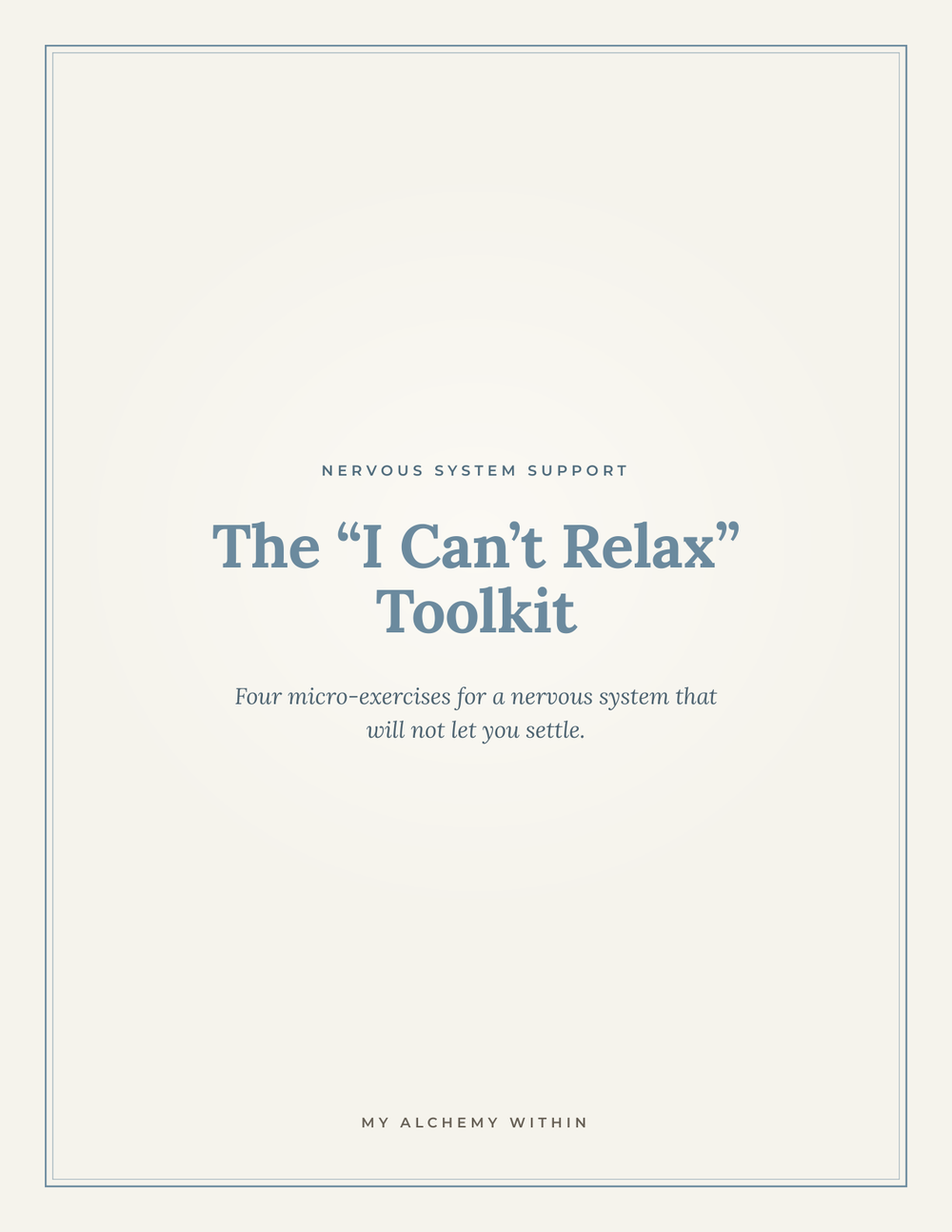
Exercises for when you can't seem to settle.
4 simple body-based exercises for a tight jaw, shallow breathing, restless energy, and a mind that keeps scanning for problems.
Get the Toolkit | $9Use it tonight. Keep it for the moments your body will not relax.
Instant download | No account needed | Printable + interactive PDF
4 exercises for a body that won't slow down.
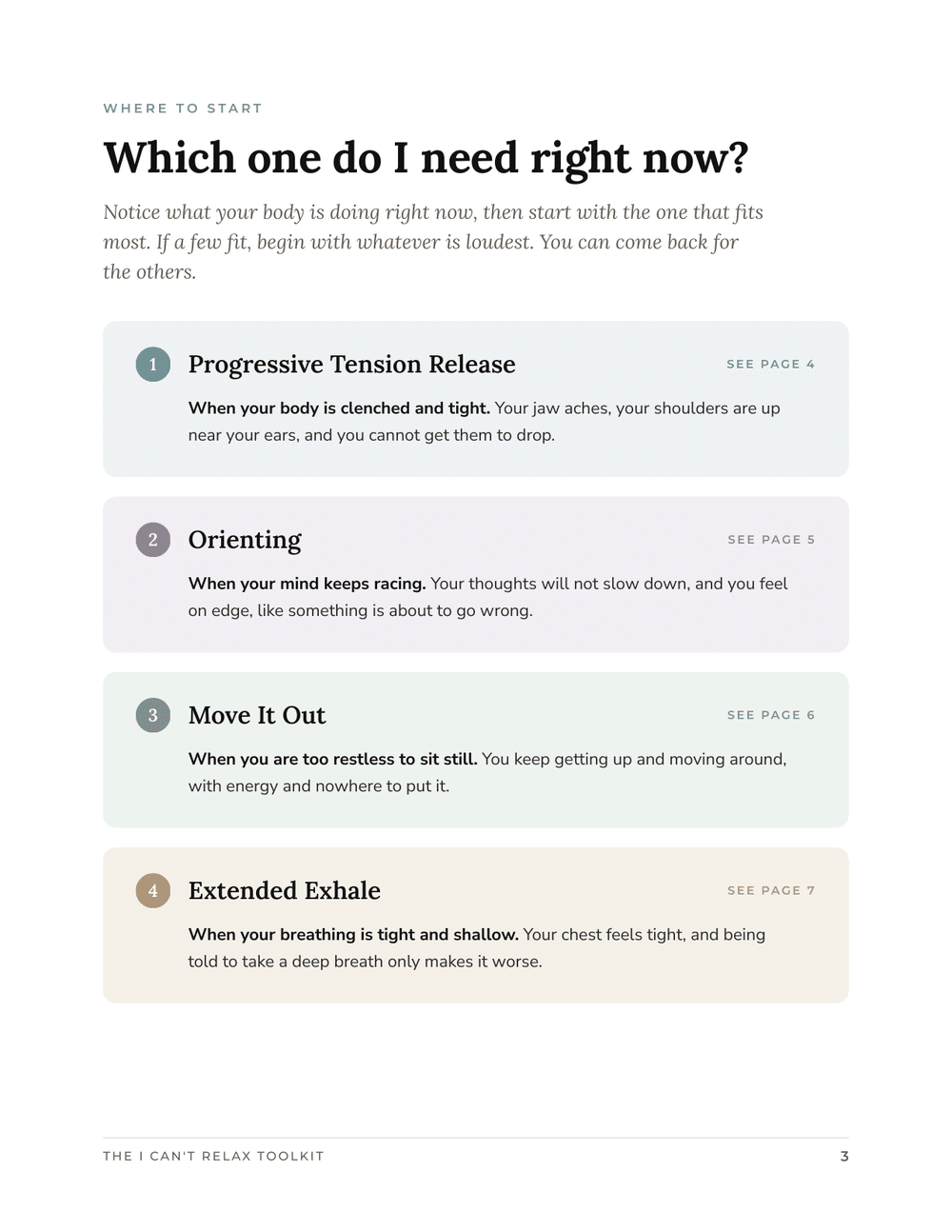
The toolkit includes a decision guide so you can go straight to the exercise your body needs right now.
Progressive Tension Release
2-3 MinutesTension doesn't always release on command. This exercise gives your muscles a way to tighten and let go: jaw press, shoulder drop, full-body squeeze, then rest.
Orienting
3-4 MinutesWhen your mind keeps scanning for danger, this gives it a way to look on purpose and see that you're safe. Slow head turns, naming what you see, then resting your gaze.
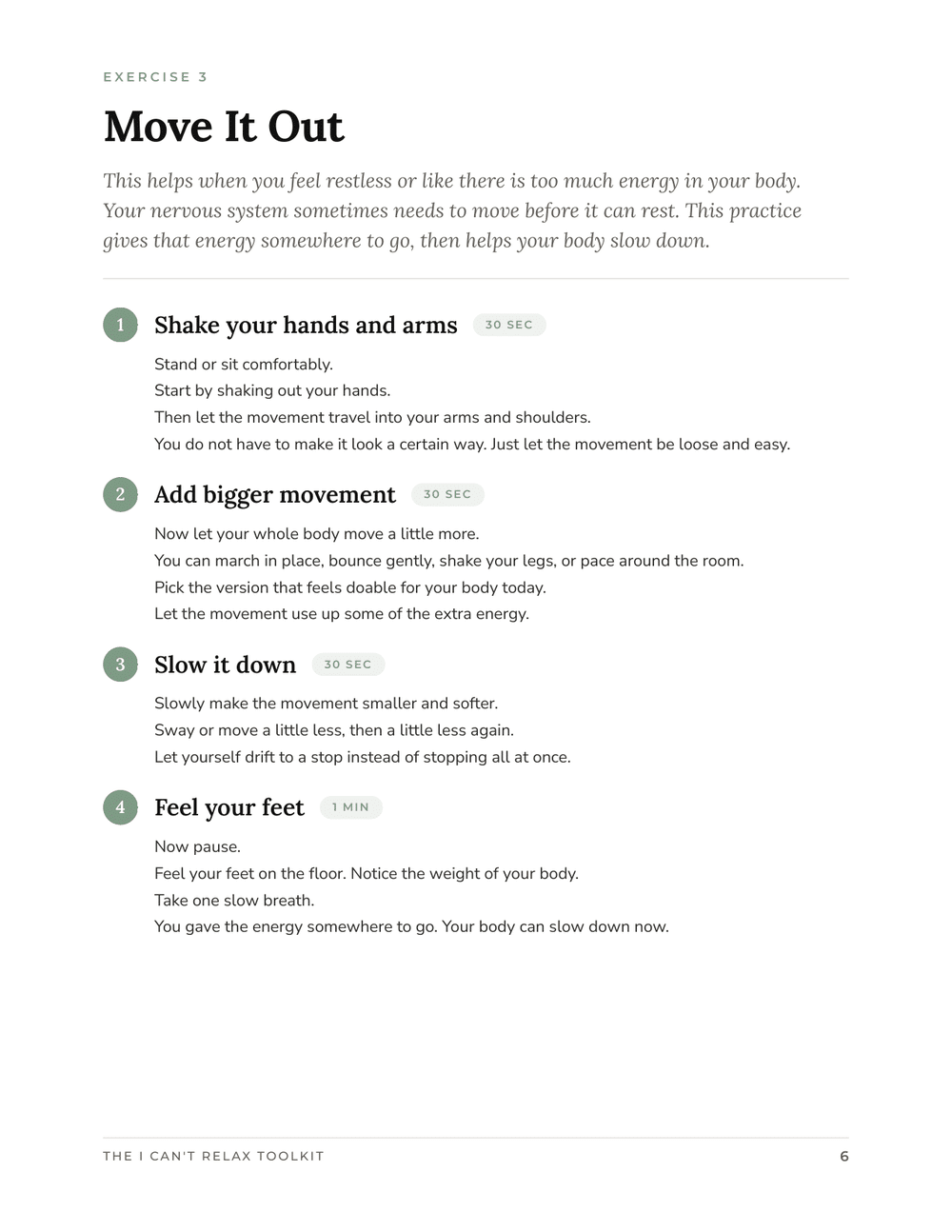
Move It Out
2-3 MinutesThere's leftover energy with nowhere to go. Shake it out, let the movement build, then slow it down until your body can rest.
Extended Exhale
4 MinutesWhen the chest is tight, "take a deep breath" makes it worse. A slow straw exhale signals safety without forcing a deep inhale.
A few pages from the toolkit
So you can see what you're getting before you commit.
How to Use the Toolkit
Designed for the moment you need it.
Download it.
Add it to your phone, tablet, or print it. Whichever feels easier to reach for when you need it.
Notice what your body is doing.
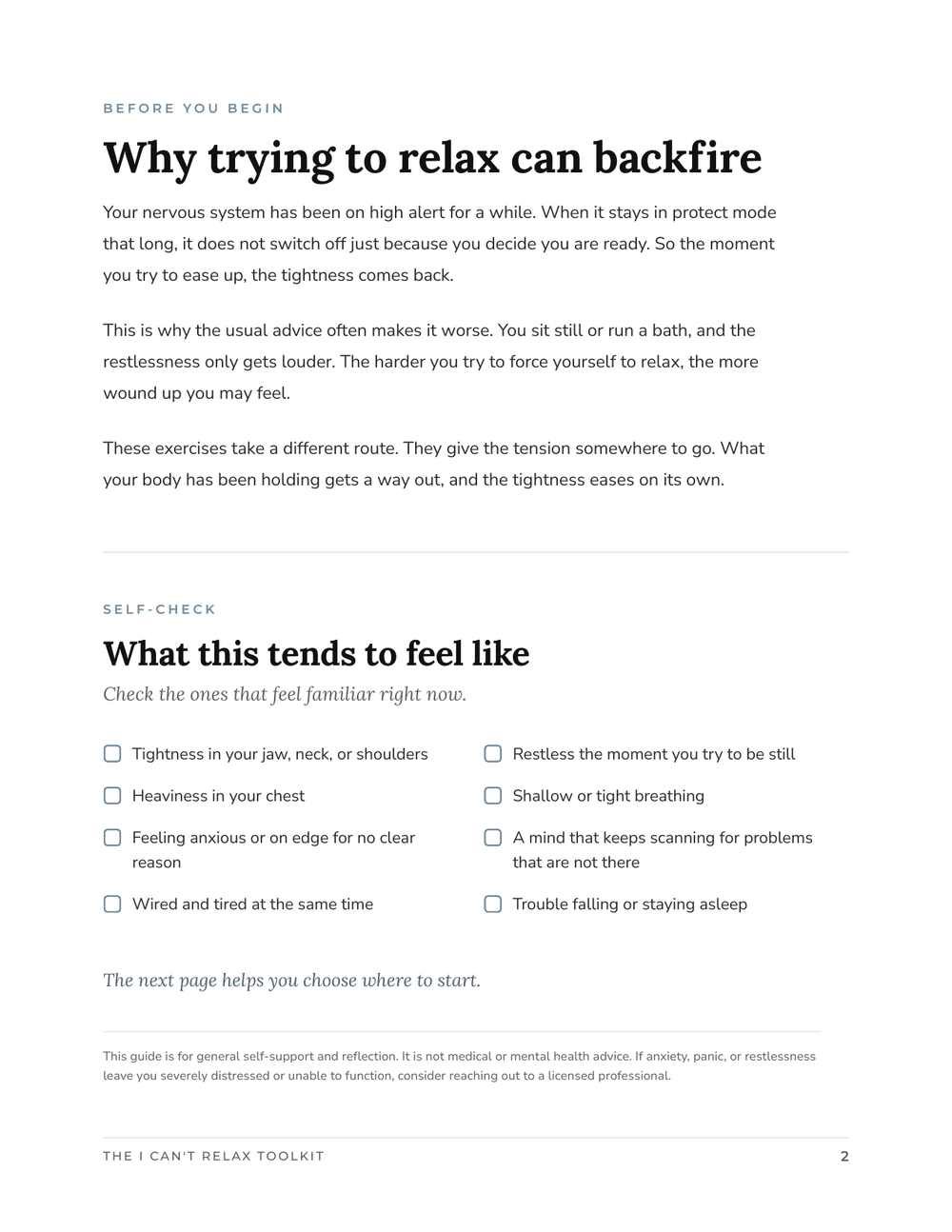
Tight jaw? Racing mind? Restless energy? Shallow breathing? The self-check on page 2 helps you name it without overthinking.
Use the decision guide.
Page 3 tells you which exercise matches what your body is showing you. Pick the one that feels right for what you need right now.
Try it. Then track what changed.
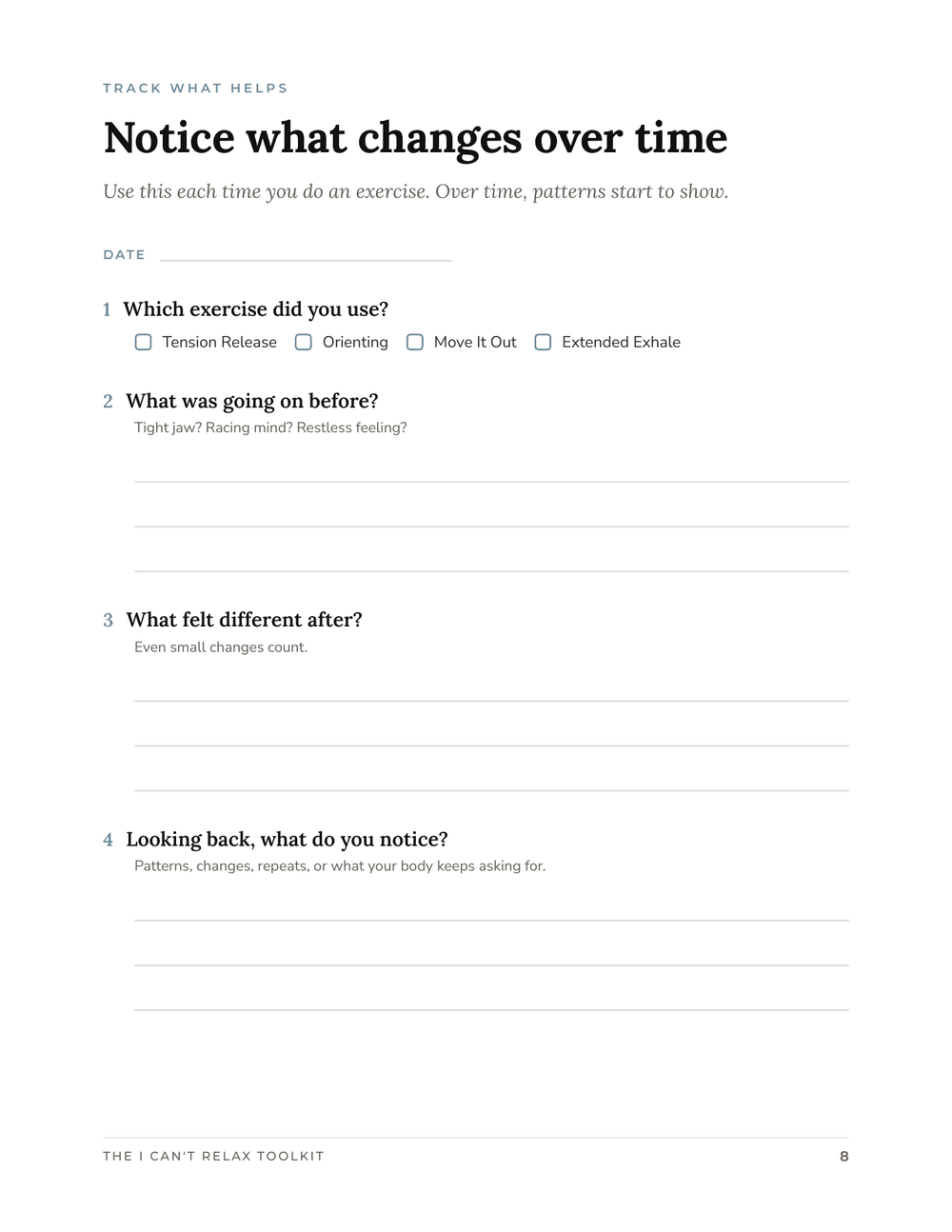
The tracking page helps you spot patterns over time. You'll start to see which exercises your body responds to and what tends to come before the activation.
This Toolkit Was Made For You If...
A quiet moment finally arrives, and restlessness shows up the second you try to ease into it. Anxiety follows close behind, and soon the whole body is running on alert even though nothing is wrong.
- The tight jaw and the shoulders that won't drop
- The deep breaths that make the tension worse
- The mind that scans for problems that aren't there
- The wired-and-tired feeling that hits every night
- Advice that sounds like it was written for someone else
These exercises give your body a way to slow down and release the tension it's been holding.
Simple, body-based tools you can use tonight.
Get the Toolkit | $9Secure checkout | No account required | Instant PDF delivery
What Else Is Inside
Why Your Body Fights Relaxation
A short explanation of what's happening in your nervous system, so you can stop wondering what's wrong with you and start working with it.
A "Which One Do I Need?" Decision Guide
Based on what's happening in your body right now: tight jaw, racing mind, restless energy, or shallow breathing. No thinking required.
A Tracking Page
Log which exercise you used, what was happening before, and what felt different after. Over a few weeks, you'll see patterns in what your body needs and what helps.
A Self-Check Before You Begin
A quick checklist for naming what's showing up in your body: tightness, restlessness, shallow breathing, or feeling on edge for no clear reason.
It's a fit if any of this sounds like you.
It comes down to what you're looking for.
- Meditation and breathing apps have made the anxiety worse, more than once
- Something to reach for in the moment, without another practice to learn
- Working with your body sounds better than forcing it to be still
- Body-based tools appeal more than another explanation of the nervous system
- Five minutes of relief tonight matters more than a perfect routine
- A simple guide you can keep and come back to
These exercises give the nervous system a way to release what's stuck. And the more you use them, the easier it gets.
Questions
How is this different from a breathing exercise or meditation app?
Most relaxation tools assume your nervous system is ready to calm down. This toolkit is designed for the opposite: when your body actively resists stillness. The exercises work with the tension and restlessness, without asking you to override them.
What if deep breathing makes my anxiety worse?
That's exactly who this was made for. Exercise 4 (Extended Exhale) specifically avoids forced deep inhales. And the other three exercises rely on movement, tension, and visual grounding, with no breathwork at all. You have options.
How long do the exercises take?
Each exercise takes 2 to 5 minutes. You pick the one that matches what your body is doing right now and follow the steps. The decision guide on page 3 helps you choose quickly.
Is this a physical or digital toolkit?
Digital. It comes as an instant PDF download. You get both a printable version and an interactive version with clickable checkboxes. No logins, no apps.
Can I use more than one exercise at a time?
Yes. Start with whichever one matches your body right now. If you still feel activated afterward, try a second one. Over time, you'll learn which combinations work best for you, and the tracking page helps you see those patterns.
More than one kind of hard day?
The "I Can't Relax" Toolkit is one of three recovery guides, each made for a different state your nervous system goes into.
- The "I Can't Relax" Toolkit · for when your body is wired and will not slow down
- The Social Hangover · for the days time around people wears you out
- The Shutdown Mode Recovery Guide · for the days the body goes numb and quiet
Pick the one that fits how you're feeling right now. Try it tonight and see what changes.
4 micro-exercises for a nervous system that won't settle.
$9 No account required | Instant download | Printable + interactive PDF Get the Toolkit9 pages | 4 exercises | No apps required
 Support The Blog