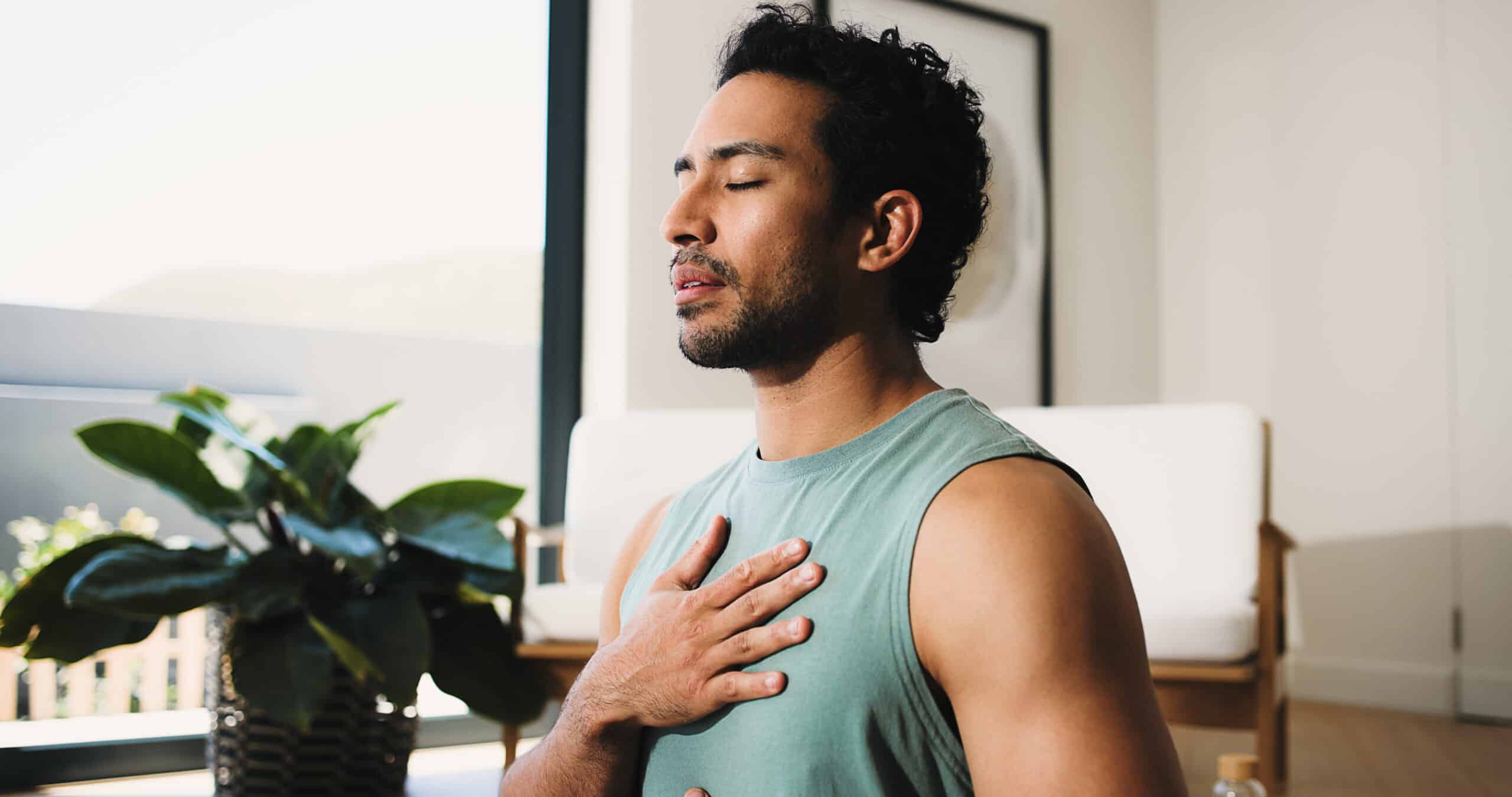
Anxiety lives in the body as much as the mind. The racing heart, the tight chest, the restlessness that won't let you sit still, the wired-but-tired feeling at the end of a long day. These are physiological signals from a nervous system stuck in a stress response, and trying to think your way out of them rarely works.
Somatic exercises offer a different entry point. Instead of working with the mind, they work directly with the body, sending signals to the nervous system that the threat has passed and it's safe to come back to baseline. The research behind these practices draws from polyvagal theory, somatic experiencing, and trauma-informed bodywork. The application is simple enough to do in your living room.
Below are seven somatic exercises for anxiety that go beyond the standard advice. Some of them might be familiar. Others are practices that rarely show up in the typical wellness article, even though somatic practitioners have been using them for decades. If you've experienced this kind of full-body activation in social settings, the post on why socializing leaves you exhausted covers a related angle worth exploring.
How to Choose the Right One
Most anxiety advice gives you a long list of techniques and tells you to try them all. That's overwhelming, and it misses something important: different anxiety states need different responses.
Before reaching for an exercise, it helps to notice what kind of anxiety is actually happening in the body right now. There are three broad categories, and the right exercise depends on which one you're in.
Match the exercise to what your body needs:
- To downregulate when the system is in high alert: Physiological Sigh, Temperature Contrast Reset, Exhale and Drop
- To discharge stored survival energy that has nowhere to go: Micro Tremor Release, Bilateral Stimulation
- To build baseline safety through containment and presence: Self-Havening, Self-Contact Pressure
This framework matters because using a discharge exercise when your system is already overstimulated can backfire. Using a downregulation exercise when your body needs to release stored energy can leave you feeling stuck. Knowing which category you're in is half the practice.
The 7 Somatic Exercises
Exercise 01Physiological Sigh
This is the foundational reset. Researchers at Stanford found that a specific breath pattern, the physiological sigh, is one of the fastest ways to reduce stress in the body. It's the breath your body naturally takes when sobbing winds down or when you wake up after a deep sleep.
How to Do It
- Inhale through your nose, then take a second short inhale on top of that first one
- Exhale slowly and fully through your mouth, longer than the inhale
- Repeat 2 to 3 times
The double inhale fully expands the air sacs in the lungs, and the long exhale offloads carbon dioxide while activating the parasympathetic nervous system. Two or three rounds is usually enough to bring measurable change. Keep this one in your back pocket for the moments when anxiety hits and there's no time for anything more elaborate.
Exercise 02Temperature Contrast Reset
Cold exposure activates something called the mammalian dive reflex, which automatically slows the heart rate and engages the vagus nerve. This is one of the fastest physiological state shifts available, and it works even when nothing else does.
How to Do It
- Splash cool water on your face, focusing on the area around the eyes and forehead
- Or hold something cold against your cheeks or the back of your neck for about 30 seconds
- Then return to neutral warmth and notice what shifts
Best used during an anxiety spike, when feeling overheated mentally, or before bed when the mind is wired and the body can't settle. The contrast between cold and warm is the active ingredient, so don't skip the warm part.
Exercise 03Micro Tremor Release
Animals shake after a stress event. Watch a dog after a frightening encounter and you'll see it. The shaking discharges the survival energy that the nervous system mobilized for fight or flight. Humans suppress this response, and the energy gets stored in the body, which is part of why chronic anxiety so often comes with restlessness, tension, and the feeling of being wired but unable to do anything with it.
This is a small daily version of a practice called TRE (Tension and Trauma Releasing Exercises). The full protocol is more involved, but a brief version can be done anywhere.
How to Do It
- Stand with feet shoulder-width apart, knees slightly bent
- Gently bounce or shake your legs, letting the movement travel up through the body
- Keep arms loose, jaw relaxed
- Continue for 30 to 60 seconds
Keep the movement subtle. The point is allowing a natural discharge, with the body leading the way. Use after stressful events, after workouts, or when feeling restless and unable to settle. Many people notice a kind of relief afterward that's hard to describe.
Exercise 04Self-Havening
Self-havening is a touch-based technique developed by neuroscientist and physician Dr. Ronald Ruden. Slow, gentle stroking of certain areas of the body produces delta brain waves, which are associated with deep calm and safety. It's almost embarrassingly simple, and it works.
How to Do It
- Slowly stroke your palms down the outside of your arms, from shoulders to elbows
- Or gently stroke your face from forehead down to chin, using both hands
- Or rub your palms together in slow, deliberate circles
- Continue for 30 seconds to a few minutes
The slow speed matters. Rushing it doesn't produce the same effect. Many people pair this with humming a low tone or repeating a calming phrase, both of which add an additional layer of vagal stimulation. For a related touch-and-attention practice, the post on how EFT tapping supports nervous system regulation covers the science of why this kind of input helps the body settle. Useful when feeling activated but unable to discharge the energy outwardly.
Exercise 05Bilateral Stimulation (Butterfly Hug)
Bilateral stimulation is the active ingredient in EMDR therapy. The alternating left-right input helps the brain integrate experiences that are otherwise stuck in a loop, which is part of what anxiety often feels like: the same thoughts and sensations cycling without resolution. The butterfly hug is a self-administered version that's gentle enough for daily use.
How to Do It
- Cross your arms over your chest, hands resting on the opposite shoulders
- Tap alternately, left then right, at a slow and steady pace
- Continue for 1 to 3 minutes
- Breathe naturally and let your eyes close or soften
The pace should feel calming and steady. Some people find it helpful to think of a difficult experience while tapping, then notice it shift. Others use it purely for the calming rhythm. Both approaches are valid.
Exercise 06Self-Contact Pressure
This one is different from soothing or comfort. Self-contact pressure provides a clear containment signal to the nervous system, the kind of input that says: I have edges, I'm held together, this body is mine. It's especially useful for the kind of anxiety that feels like spilling outward or losing your shape.
How to Do It
- Place one hand firmly on your chest, the other firmly on your stomach, and press gently
- Or press both hands into your thighs while sitting
- Or wrap your arms around your torso in a self-hug, pressing slightly
- Hold for about 30 seconds, breathing slowly
The pressure matters more than the placement. Firm but gentle, with the intention of giving the body a sense of structure. This is grounding rather than soothing, and the difference is felt in the body once you try it.
Exercise 07Exhale and Drop
Most breathing exercises focus on the breath alone, but this one pairs the breath with a physical release that signals safety to the entire body. The mechanical part is the whole point: the body has to actually drop for the nervous system to register the shift.
How to Do It
- Inhale gently through the nose
- Exhale slowly through the mouth, taking longer than the inhale
- While exhaling: drop the shoulders, soften the jaw, let the chest sink slightly
- Repeat 3 to 5 rounds
The body drop is what makes this different from regular breathwork. Many people breathe deeply while still holding tension in the shoulders and jaw, which sends mixed signals to the nervous system. Pairing the exhale with a deliberate physical release teaches the body what downshifting actually feels like, mechanically.
The goal of these exercises is to teach the nervous system, through repetition, what safety actually feels like. Daily low-pressure practice does more than occasional crisis use, and small consistent reps build something larger over time.
What Makes These Different from Standard Advice
Most anxiety articles offer the same handful of techniques: breathe deeply, drink water, take a walk. These work in mild moments, but they often fall short for the kind of anxiety that lives in the body and doesn't respond to surface-level intervention.
The exercises above target the nervous system directly. They use specific physiological mechanisms (the dive reflex, vagal stimulation, bilateral input, mechanical release) to shift the body's state from activation to rest. The change registers in the body, measurably.
Practitioners in somatic experiencing, polyvagal-informed therapy, and trauma-sensitive bodywork have been using these for decades. They rarely make it into mainstream wellness content because they don't sound flashy. The flashiness was never the point.
How to Build a Daily Practice
Daily practice rewires more than crisis use. The goal is consistent low-pressure exposure rather than waiting for anxiety to spike before reaching for a tool. A simple structure that fits into a normal day:
Morning
- Physiological Sigh (1 to 2 rounds)
- Self-Contact Pressure for 30 seconds while sitting
Midday
- Exhale and Drop, especially after stressful interactions
- Or Micro Tremor Release after long periods of sitting
Evening
- Temperature Contrast Reset, especially if the mind is wired before bed
- Self-Havening or Bilateral Stimulation for winding down
Treat this as a menu of options to draw from rather than a routine to follow perfectly. Some days will need more, some less. The practice that matters is the one you actually do.
Overdoing the techniques, turning this into a perfect routine you have to maintain, or only reaching for them when anxiety is already high. The point is daily reps that build capacity over time.
The Real Goal of Somatic Practice
Most anxiety advice frames the goal as "calming down." That framing misses what's actually happening. An anxious nervous system is doing its job. It's responding to perceived threat with the resources it has available.
What somatic practice teaches the body, through repetition, is what safety feels like. Over time, the system begins to expect that signal. The baseline shifts. Anxiety doesn't disappear, but its grip loosens, because the body has new information about what's possible.
Each of the seven exercises above is a small deposit in that account. None of them is dramatic on its own. The cumulative effect, practiced gently and often, is what creates real change.
5 Somatic Exercises Used for Anxiety
A printable worksheet with 5 of the most accessible exercises, formatted for use in the moment.
Get the Free WorksheetPractice Builds Capacity
The somatic approach asks for something different from most anxiety strategies. It asks for patience, and for trust that small repeated inputs add up to something larger than the sum of their parts.
One physiological sigh on its own does little to undo years of nervous system patterning. Neither does a single round of bilateral stimulation. What shifts things is the accumulation of small, gentle, consistent practice. Daily reps that teach the body, over and over, what safety feels like.
If somatic work is new for you, start with one exercise. Pick the one that sounded most appealing while reading. Practice it daily for a week. See what changes. Then add another. For a longer body-based practice that pairs well with these exercises, the Core Release Ritual walks through a gentle decompression sequence designed for chronic tension and back pain.
For deeper exploration of how stored emotions, nervous system states, and emotional patterns shape the body's response to stress, the Emotional Alchemy Workbook walks through the underlying terrain in more depth.
Want to stay connected to this work?
I share weekly essays, gentle tools, and quiet insights. No spam, ever.
Unsubscribe anytime. Your peace matters more than my list.
Want to stay connected to this work?
I share weekly essays, gentle tools, and quiet insights to support your healing.
No spam, ever.
Unsubscribe anytime. Your peace matters more than my list.


 Support The Blog