You’ve tried. You’ve told yourself to move on. But the feelings won’t budge. Here’s what’s really happening and what the advice to “just let go” gets wrong.
You know you should let go. Everyone says so. Move on. Stop dwelling. Release it. But every time you try, the feeling is still there waiting in your chest, tightening your shoulders, surfacing at 2am when you’re trying to sleep.
Maybe it’s anger at someone who hurt you. Maybe it’s grief that won’t finish. Maybe it’s shame from something that happened years ago that your body still carries like it was yesterday.
You’ve journaled about it. Talked about it. Tried to reason your way through it. And still it stays.
Here’s the part no one tells you: the problem isn’t that you’re bad at letting go. It’s that “letting go” isn’t actually how emotions work.
A NOTE
This site focuses on nervous system regulation through body-based, trauma-informed practices. Instead of pushing positivity or productivity, Alchemy Within explores what is actually happening beneath stress, anxiety, emotional exhaustion, and shutdown, and how to work with it safely.
If traditional self-help hasn’t worked for you, you’re not broken. Your nervous system may simply need a different kind of support.
The Problem with "Letting Go" Advice
Most advice about letting go treats emotions like decisions. As if you can simply choose to stop feeling something and it will obey.
But emotions don’t work that way. They’re not thoughts you can argue with or beliefs you can reframe. They’re physiological events: patterns of sensation, tension, and activation that live in your body, not just your mind.
When someone tells you to “let go,” they’re usually suggesting you do one of these things:
- Distract yourself: stay busy, think positive, focus on something else
- Rationalize it: remind yourself it’s in the past, that holding on only hurts you
- Force acceptance: decide you’re over it, even if you don’t feel over it
- Suppress it: push the feeling down and wait for it to fade
None of these are inherently bad. But none of them address what’s actually keeping you stuck.
Because the body can’t let go of what it hasn’t fully felt.
"Letting go" isn't something you do to an emotion. It's something that happens naturally once the emotion has been fully received.
Why Emotions Get Stuck in the First Place
Emotions are designed to move. The word itself comes from the Latin emovere: to move through, to move out. When allowed to complete their natural cycle, emotions arise, peak, and dissolve. They don’t linger.
But most of us learned, early on, that certain emotions weren’t welcome.
Maybe anger was dangerous in your household. Maybe sadness made people uncomfortable. Maybe you learned that being “too much” pushed people away, so you got very good at swallowing what you felt before it could spill out.
These interruptions, whether from external pressure or internal protection, stop the emotion mid-cycle. And when an emotion doesn’t complete, it doesn’t disappear. It gets stored.
This is why you can “know” something is in the past and still feel it in the present. Your mind has moved on. Your body hasn’t. The incomplete emotion is still waiting to be felt and it will keep surfacing until it is.
What's Actually Happening in Your Body
When you experience something emotionally significant especially something painful your nervous system responds. Heart rate changes. Muscles tense. Breath shifts. Stress hormones release.
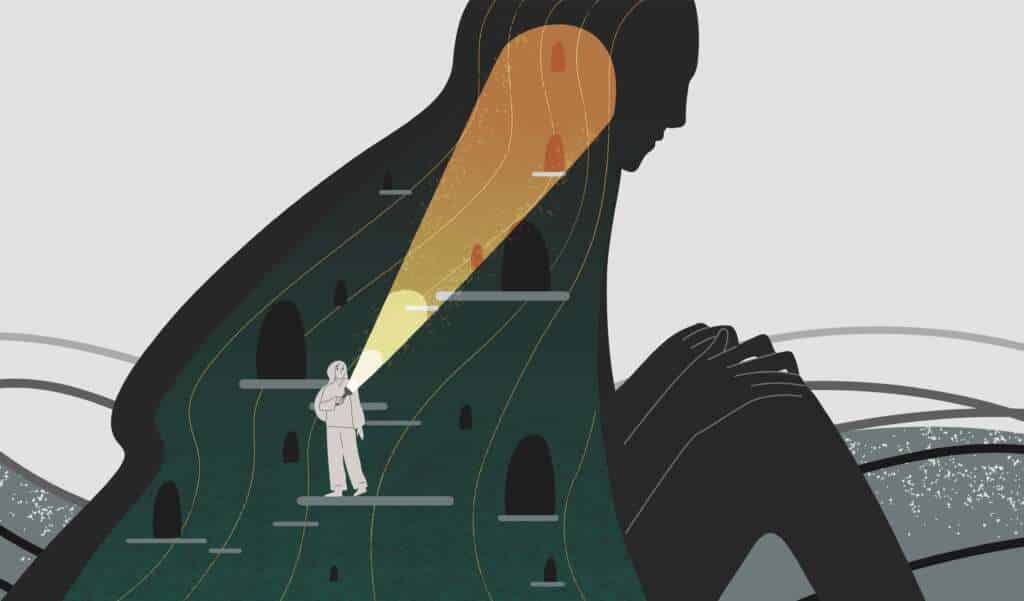
If the experience is overwhelming, or if expressing the emotion isn’t safe, your system does something protective: it puts the feeling on hold. It tucks the unfinished response into your body, often as chronic tension, constriction, or that vague sense of unease that never quite goes away.
This isn’t weakness or dysfunction. It’s your nervous system trying to protect you from more than you could handle at the time
But the cost is that the emotion stays live. It’s still running in the background, affecting how you feel, how much energy you have, even when you’re not consciously thinking about the original event.
Signs an Emotion Is Still Stored in Your Body
- You think about something “old” and your body still reacts: racing heart, tight chest, heat rising
- You’ve talked about it many times but don’t feel any lighter
- Certain triggers bring the feeling back at full intensity, as if it just happened
- You feel tension in specific areas (jaw, shoulders, stomach) that won’t release no matter what you try
- You have a sense of “something unfinished” you can’t quite name
- You avoid certain topics, places, or people, not because you’ve moved on, but because it’s still too much
If any of this sounds familiar, you’re not broken. You’re not bad at healing. You simply have unfinished emotional business that your body is still holding.
What Actually Helps Emotions Release
If forcing yourself to “let go” doesn’t work, what does?
The answer is counterintuitive: you have to feel the emotion you’ve been trying to get rid of.
Not think about it. Not analyze it. Not explain it or justify it or argue with it. Actually feel it, in your body, as sensation, without trying to change it or rush it along.
This is what completes the cycle. This is what allows the nervous system to finally register: that experience is over. I can stop holding on now.
Why This Is Hard (And Why We Avoid It)
If it were easy, you would have done it already.
The reason we avoid feeling old emotions is usually because they were overwhelming the first time. Revisiting them can feel like opening a door we barely managed to close.
But here’s the difference: the first time, you were in the experience. Now, you can be with it. You can observe it. You can feel it without being swallowed by it.
This isn’t about reliving trauma or forcing yourself into distress. It’s about creating enough safety, internally and externally, that your body feels willing to finally release what it’s been holding.
A Gentle Practice: Meeting What's There
This isn’t about fixing anything. It’s about giving your body a chance to complete what it couldn’t before.
- Find a quiet moment. Sit or lie somewhere you won’t be interrupted. Let your body settle.
- Bring to mind something you’ve been trying to let go of. Don’t force yourself into the most intense memory. Start with something manageable.
- Notice what happens in your body. Where do you feel it? Chest? Throat? Stomach? Shoulders? Don’t try to change it. Just notice.
- Stay with the sensation. Breathe. Let your attention rest gently on whatever you’re feeling. You don’t have to do anything with it.
- Let it move how it wants to move. This might look like a deep breath, tears, trembling, heat, or simply a slow softening. Trust what arises.
- Stop when it feels like enough. This isn’t about pushing through. Even a few moments of genuine presence can begin to shift things.
You may need to return to this many times. That’s not failure. That’s the process. Emotions that have been stored for years don’t usually release in a single sitting.
What Letting Go Actually Looks Like
When an emotion is finally allowed to complete, something shifts. Not dramatically, necessarily. Sometimes it’s just… quieter.
The memory doesn’t disappear. But the charge does. You can think about what happened without your body clenching. You can talk about it without your voice tightening. The past becomes the past, not because you forced it there, but because your nervous system finally registered that it’s over.
This is different from numbing, which can feel like relief but leaves you disconnected. True release leaves you more present, not less. More grounded. More able to feel other things including good things.
Letting go isn’t about forgetting. It’s about the feeling no longer having a grip on you. You remember what happened. You may even still care about it. But it no longer runs your body or hijacks your present.
When You Need More Support
Some emotions are too big to process alone, and that’s not a character flaw, it’s just reality.
If you’re dealing with trauma, if the feelings are overwhelming, if you’ve tried to approach them and keep getting flooded or shutting down, please consider working with a professional. Therapists trained in somatic work, EMDR, or other body-based approaches can help you access and release stored emotions safely.
This article can offer a starting point, but it’s not a replacement for proper support when support is needed.
Want a Guided Way to Work With Your Emotions?
The Emotional Alchemy Workbook includes step-by-step practices for identifying where emotions live in your body, working with them gently, and supporting your nervous system through the process.
Frequently Asked Questions
Why can't I let go of something that happened years ago?
Time doesn’t automatically heal emotions. Processing them does. If an emotion was interrupted or suppressed when it first arose, it can stay stored in your body indefinitely. The fact that it’s “old” doesn’t mean your nervous system has registered that it’s over.
Is "letting go" the same as forgiveness?
Not necessarily. Letting go is about releasing the emotional grip something has on your body and nervous system. Forgiveness is a separate process that may or may not follow. You can let go of the charge around something without forgiving the person who caused it and you can forgive someone without your body having fully released the pain.
What if I'm afraid that feeling the emotion will make it worse?
This is a common and valid concern. The key is titration: approaching the feeling in small, manageable doses rather than diving into the deep end. You don’t need to feel everything at once. Even brief moments of contact, with plenty of pauses and grounding, can begin the release process without overwhelming you.
How do I know if an emotion has actually released?
The clearest sign is that you can think about the situation without your body reacting the way it used to. The memory is still there, but the intensity is different. You might also notice less tension in areas that were chronically tight, more emotional flexibility in general, or simply a sense of space where there used to be heaviness.
Why does talking about it over and over not help?
Talking engages the cognitive brain, but stored emotions live in the body. You can understand something completely and still feel it intensely because understanding and feeling are processed differently. That’s why body-based approaches often succeed where talking alone doesn’t, for example by noticing sensation, allowing physical expression, and giving the nervous system space to complete its response.
The Invitation
If you’ve been hard on yourself for not being able to let go, consider this permission to stop trying.
Not because letting go isn’t possible but because forcing it isn’t how it happens.
What if, instead of trying to release the feeling, you simply met it? What if you let it know it’s allowed to be there? What if you stopped fighting the very thing that needs your attention in order to finally leave?
Emotions don’t want to haunt you forever. They want to complete. They want to move through. They’re waiting for the one thing you may never have given them: your full, embodied presence.
That’s not weakness. That’s not wallowing. That’s the door they need you to open so they can finally walk through.
About The Author
Lauren created Alchemy Within after navigating her own experience with chronic stress, social fatigue, and feeling overwhelmed. Through research and lived experience, she focuses on understanding how the nervous system responds to everyday stress. Her work is centered on helping others feel less alone and more supported as they learn to work with their bodies.
Want to stay connected to this work?
I share weekly essays, gentle tools, and quiet insights to support your healing.
No spam, ever.
Unsubscribe anytime. Your peace matters more than my list.
Want to stay connected to this work?
I share weekly essays, gentle tools, and quiet insights. No spam, ever.
Unsubscribe anytime. Your peace matters more than my list.
Share This Post


 Support The Blog