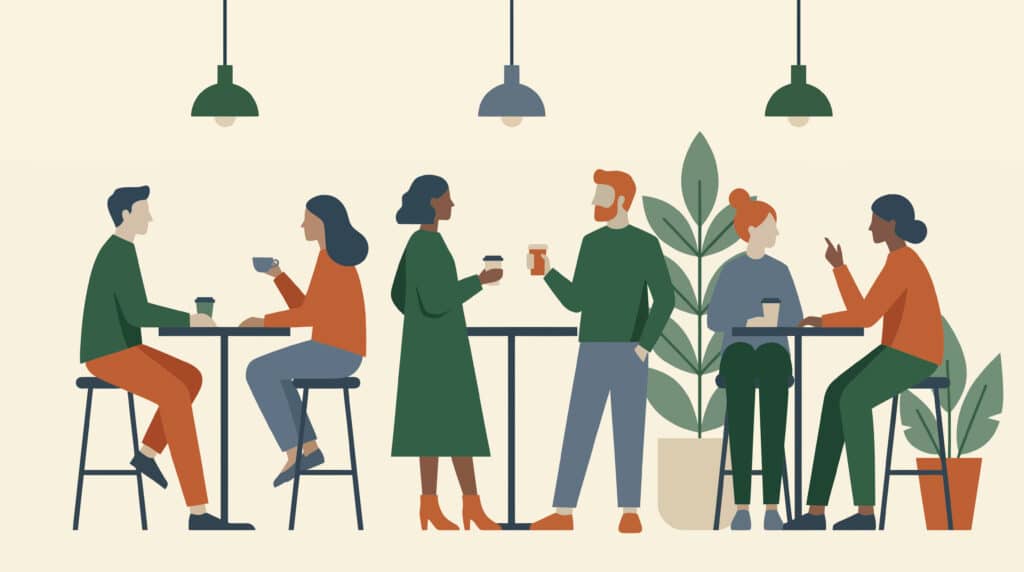
Socializing is supposed to be the easy part of life: kicking back with friends and catching up. For a lot of people, though, it's also work, and it can leave them completely depleted afterward. Here's a breakdown of why social time can be so tiring, and what helps.
Socializing takes real effort from the brain and body, even when it looks like rest. The exhaustion afterward is that effort catching up, and it arrives whether or not you had a good time.
Why It's Tiring Even for People Who Socialize Well
Doing something well and finding it easy aren't the same thing. A person can look relaxed and friendly in a conversation while working hard the whole time, planning what to say next and noticing every small change in the other person's mood. From the outside it looks natural, because the effort doesn't show.
That's why getting better at socializing doesn't always make it less tiring. Most advice assumes the exhaustion comes from struggling, and that smoother small talk would fix it. For a lot of people the opposite is true: the smoother the performance, the more work went into it.
What Your Brain Is Doing During a Conversation
Even a simple conversation involves several jobs at once:
- Following what the other person is saying closely enough to respond
- Deciding what to say next
- Reading facial expressions, tone, and body language
- Filtering out background noise and other conversations
- Remembering names and details
- Adjusting your own expression and voice to fit the moment
The brain handles most of this automatically, and automatic doesn't mean effortless. All of it draws on the same limited energy your body uses for everything else, and the longer or more demanding the situation, the more of this work piles up.
What the research shows
In a University of Helsinki study published in the Journal of Personality in 2016, researchers followed 48 students for 12 days, checking in five times a day about their behavior and how tired they felt. When people had been acting sociable and talkative and meeting many people, they reported more fatigue about three hours later, and the effect showed up whether they were introverts or extroverts. It was a small study, and the lead researcher noted the tiredness seemed to fade with recovery time, but the pattern is useful: the fatigue followed the socializing itself, whatever the personality type.
That's also why a one-hour meeting where you had to perform the whole time can leave you more tired than a slow evening with a close friend. The fatigue follows the effort, and the effort depends on the situation: how many people were there, how well you knew them, how loud the room was, and how much of yourself you had to manage.
Why New People Are More Tiring Than Close Friends
For me, the most tiring night has always been a party full of people I don't really know. The same hours with close friends leave me with plenty left over, and the difference isn't the people themselves. With strangers, there's simply more to figure out.
With old friends, your system runs on shared shorthand. You know their humor, their rhythms, what silence means with them, and how you're being received without checking. With strangers, every one of those becomes an open question your brain works on continuously: reading new faces, learning new rules, managing first impressions, wondering how that last comment came across. It's the difference between driving your daily commute and driving in a foreign city. Both are driving, and one of them empties you.
New settings add the same kind of work, like a first date or a networking event where every conversation restarts from zero. The exhaustion afterward is proportional to how much of the evening your system spent navigating without a map.
Close friends aren't always easy either. On a day that started stressful, or short on sleep, even comfortable company can leave you depleted. Some nights out with the same people fill you up, and some empty you, which says less about the friendship and more about how much you had available going in.
Is This Just an Introvert Thing?
Partly, and less than the internet suggests. Introverts do tend to feel the drain sooner and need more recovery, and the Helsinki data still found fatigue in extroverts three hours out. Social effort tires everyone; the difference is how quickly it adds up and how much recovery it takes.
The framing matters because of what people conclude when they get it wrong. The usual conclusion is some version of "I always thought something was wrong with me for getting tired around people." The data points somewhere simpler. The tiredness follows the workload, and some nervous systems take in more of the room than others, so the same hours ask more of them. That's a description of sensitivity, and it cuts both ways.
Why Even a Fun Night Can Be Draining
The part that confuses people most is crashing after a night they loved. It seems like enjoyment should make the evening restorative, and sometimes emotionally it is. The effort happens either way, though. Your brain worked just as hard reading the room at a great party as it would have at a tense one, and laughing for four hours is still four hours of listening and responding.
That crash after socializing has a name: a social hangover, and it usually comes from one of three kinds of drain. The noise and lights of the room, the feelings you carried for other people, or the version of yourself you performed all night. Naming which one you're in changes what recovery looks like, and the full breakdown lives in that article.
How to Recover After Socializing
Plan for recovery time. A big social day is a demanding day, so give it a rest day the way you would a hard workout. Keep the morning after light on purpose, and treat that as part of the plan, since it's what makes the next event easier to say yes to.
Take short breaks during the event. Two minutes outside or in a quiet hallway mid-party gives your system a chance to catch up. The edge of a loud room is easier than the middle of it, and leaving while you still have something left beats leaving completely empty.
Recover on purpose afterward. The first five minutes home matter more than the rest of the night. Dim the lights and let your shoulders drop before the phone gets a turn. Body-based tools reach this kind of tired faster than thinking does, and a few of the somatic exercises you can do at home work well here.
And notice your own pattern. Which situations empty you, and what your body asks for afterward. If you're not sure where to start, the Start Here page points you to support for the state you're in.
The Social Hangover Recovery Guide
A step-by-step guide for the hours after socializing. Name your kind of drain, follow the short recovery routine that matches it, and reset the next morning.
Get the Recovery GuideLauren Sweeney is the founder of My Alchemy Within, where she writes plain-language, research-informed guides to nervous system recovery. Her work draws on published research and her own lived experience with an easily overwhelmed nervous system. She is not a therapist, and everything here is educational rather than medical advice. More on the About page.
This article is for education and general self-support. It is not medical or mental health advice, and it is not a substitute for care from a qualified professional. If you are in crisis or your symptoms are interfering with daily life, please reach out to a professional.


 Support The Blog